
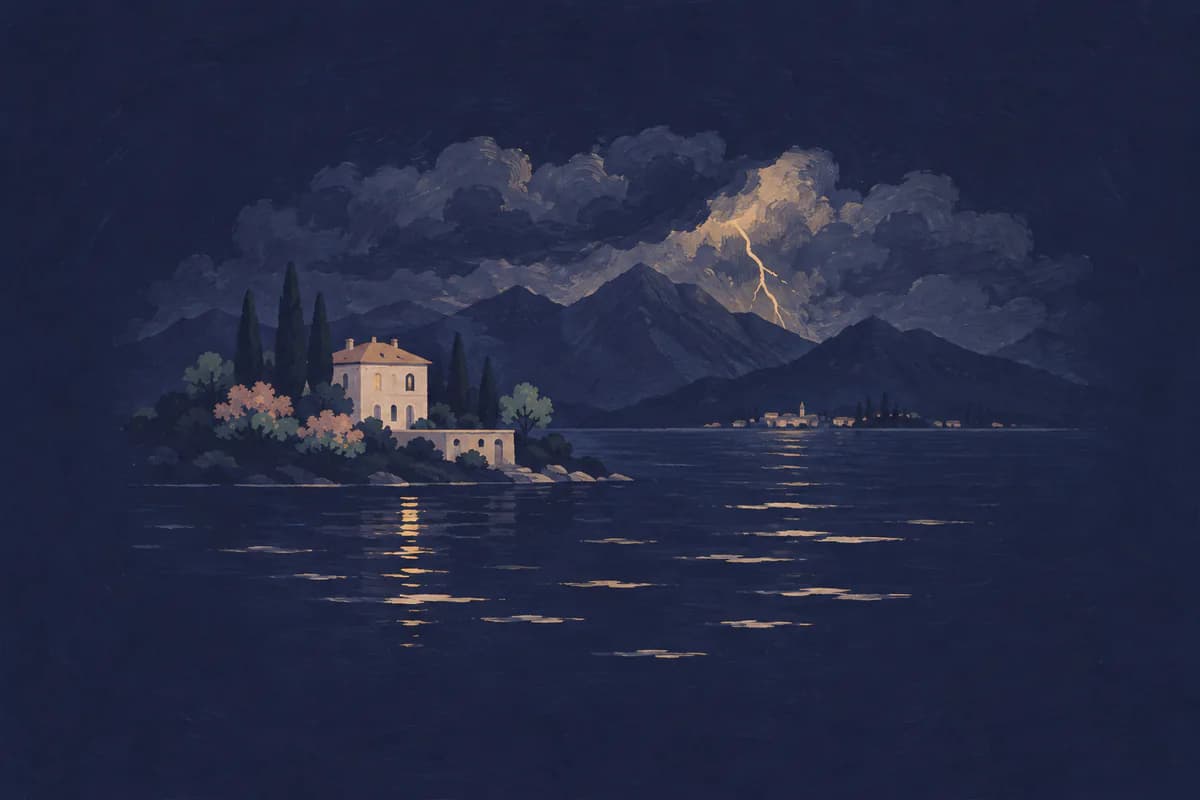
Mary ShelleyJune 1816, near Geneva; told in 1831
Mary Shelley's waking dream of Frankenstein
A nineteen-year-old, a ghost-story contest and a vision in the half-dark: the most famous origin story in English fiction.
Diese Seite ist für die Sprache Deutsch noch nicht verfügbar. Deshalb liest du die englische Version.
EntwurfDiese Seite wurde noch nicht redaktionell geprüft.
Der Traum
Nach den unten genannten Quellen in eigenen Worten nacherzählt, nicht zitiert.
In the summer of 1816 Mary Godwin (soon Mary Shelley) was staying on the shore of Lake Geneva with Percy Shelley, Lord Byron and Byron's doctor, John Polidori. Kept indoors by storms, the group agreed that each of them would write a ghost story. For days, she said, she could think of nothing.
Then, one night after a long conversation about whether life could be artificially created, she lay down but could not sleep. With her eyes closed she saw, far more vividly than an ordinary daydream, a student kneeling beside a figure he had assembled, the figure stirring into life, and the student fleeing in horror, hoping it would die again. She opened her eyes in fear. The next day she began the story that became Frankenstein.
- Shelley 1831
Woher die Geschichte stammt
Frankenstein was first published anonymously in 1818. Mary Shelley told the story of the dream in a new introduction written for the revised edition of 1831, fifteen years after the summer at the Villa Diodati. It is her own account, and it is the only one we have of the vision itself.
She is careful to say she did not sleep: she calls it a waking dream, images that came unbidden while she lay with her eyes shut. Because the account was written so long afterwards, scholars treat its details, such as how many days passed before the idea came, with some caution.
Wie der Traum gedeutet wurde
Forschung
What she describes sounds like hypnagogic imagery, the vivid pictures many people see while drifting towards sleep. Researchers note that these images often recombine whatever the mind was busy with that evening, which here was a conversation about galvanism and the creation of life.
- Barrett 2001
Geschichte
The introduction is also a piece of self-presentation, written by a widowed professional author for a new popular edition. That does not make the vision untrue, but it explains why the story is told so beautifully: it is the author shaping her own legend.
- Shelley 1831
Fragen zu deinen eigenen Träumen
- What were you talking or reading about just before your most vivid dream?
- Have you ever seen images while falling asleep that felt stronger than a daydream?
- Is there a fear you have been circling that a story could help you face?
Symbole in diesem Traum
Hattest du einen Traum, der dir im Gedächtnis geblieben ist?
Meinen Traum erzählenQuellen
Jede Deutung auf dieser Seite stammt aus diesen Werken. Noch sind nicht alle Seitenangaben geprüft. Ausstehende Prüfungen sind gekennzeichnet.
Mary Wollstonecraft Shelley (1831). Frankenstein; or, The Modern Prometheus (revised edition, with a new introduction by the author). London: Henry Colburn and Richard Bentley.
erstmals veröffentlicht: 1818
gemeinfrei
- Fundstelle: Author's introduction to the 1831 edition (Fundstelle noch nicht geprüft)
- Fundstelle: introduction (Fundstelle noch nicht geprüft)
The dream account is in the author's introduction, dated 15 October 1831, written fifteen years after the event.
Deirdre Barrett (2001). The Committee of Sleep. New York: Crown.
als Quelle angeführt, nicht vervielfältigt
- Fundstelle: chapters on dreams and fiction writers (Fundstelle noch nicht geprüft)
Harvard psychologist on dreams and creative problem solving, with historical examples.