
Stephenie Meyer2 June 2003
The meadow dream behind Twilight
A stay-at-home mother woke from one vivid scene, wrote it down so she would not lose it, and had a finished novel three months later.
Esta página aún no está disponible en el idioma que elegiste (Español), así que estás viendo la versión en inglés.
BorradorEsta página aún no ha sido revisada por un editor.
El sueño
Narrado con nuestras propias palabras a partir de las fuentes indicadas abajo, sin citas textuales.
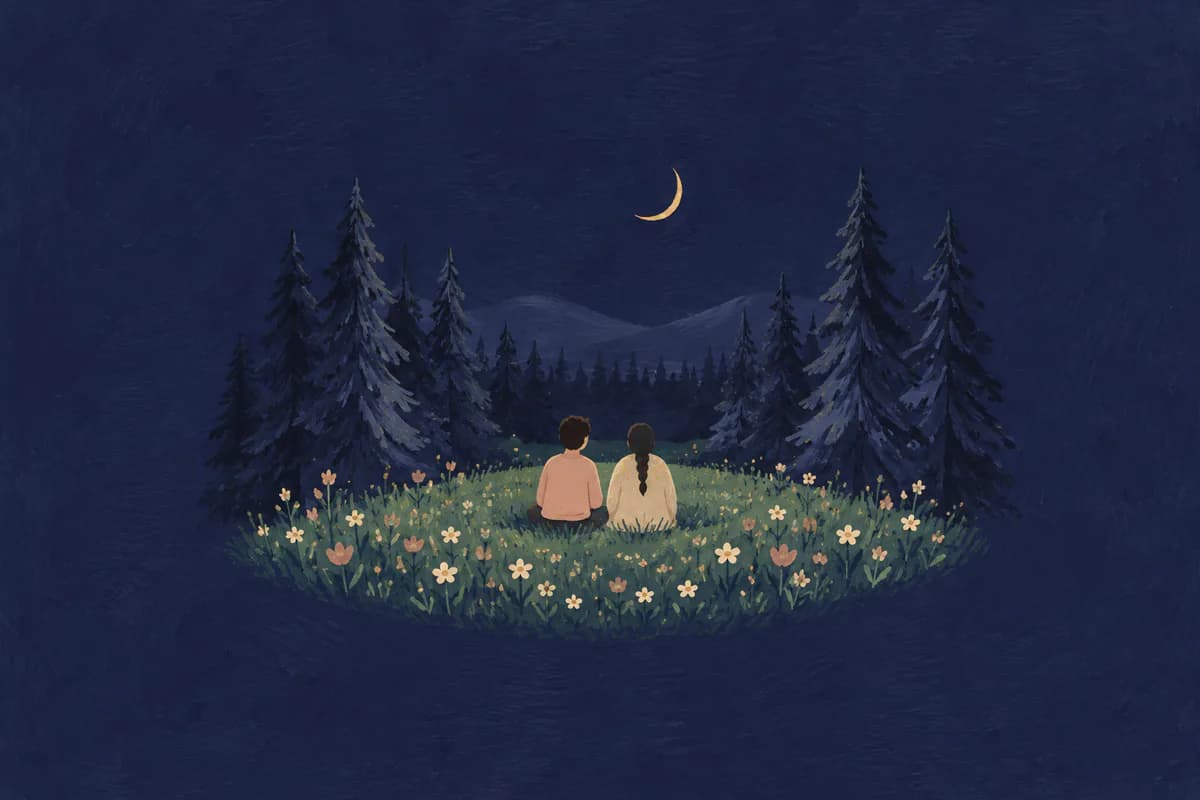
Stephenie Meyer has written that she woke on 2 June 2003 from a very vivid dream. In it, two people were talking intensely in a meadow in the woods: an ordinary girl and a beautiful, sparkling young man who was a vampire. They were talking about how hard it was to be in love when he was drawn to the scent of her blood and struggled not to kill her.
She wanted to know what happened to the couple, so she sat down and typed out the scene, calling the characters simply "he" and "she". That scene became chapter 13 of Twilight.
- Meyer 2005
De dónde viene la historia
Meyer was a mother of three young sons with no writing career at the time. By her account she wrote every day after that, mostly at night, and finished the manuscript by the end of the summer. Twilight was published in 2005 and began one of the best-selling series of its decade.
The story comes from Meyer herself, on her official website and in many interviews. It is consistent, precisely dated and unusually modest: she credits the dream with one scene and the two characters, not with the whole book.
Cómo se ha interpretado
Investigación
Dream researchers who study creativity find that dreams rarely hand over finished works but often supply a striking scene, image or situation that the waking writer then builds out. Meyer's account fits that pattern closely: one scene, then months of deliberate work.
- Barrett 2001
Psicoanálisis
A reader in the psychoanalytic tradition would notice the tension at the heart of the dream: desire and danger in the same person. Freud treated dreams as places where wishes appear in disguise, and here the wish and the threat are barely disguised at all.
- Freud 1913
Preguntas para tus propios sueños
- Have you ever dreamed about someone who felt both safe and dangerous?
- Is there a scene from a dream you still wonder about, as if it had a before and after?
- What would you write down tonight if you knew it could turn into something?
Símbolos de este sueño
¿Has tenido un sueño que no has podido olvidar?
Contar mi sueñoFuentes
Todas las interpretaciones de esta página se basan en estas obras. Aún no se han comprobado todas las referencias a páginas; las pendientes están marcadas.
Stephenie Meyer (2005). The Story of Twilight & Getting Published. stepheniemeyer.com (the author's official website).
citado, no reproducido
- Ubicación de la cita: The Story of Twilight & Getting Published (referencia aún sin comprobar)
Undated web page by the author; the year given is the novel's publication year.
Deirdre Barrett (2001). The Committee of Sleep. New York: Crown.
citado, no reproducido
- Ubicación de la cita: chapters on writers and dreams (referencia aún sin comprobar)
Harvard psychologist on dreams and creative problem solving, with historical examples.
Sigmund Freud (1913). The Interpretation of Dreams, traducción de A. A. Brill. New York: Macmillan.
primera publicación: 1900
dominio público
- Ubicación de la cita: ch. III, the dream as wish-fulfilment (referencia aún sin comprobar)
First English translation, of the third German edition. Public domain; scholars consider it looser than the later Strachey translation, which is copyrighted.