
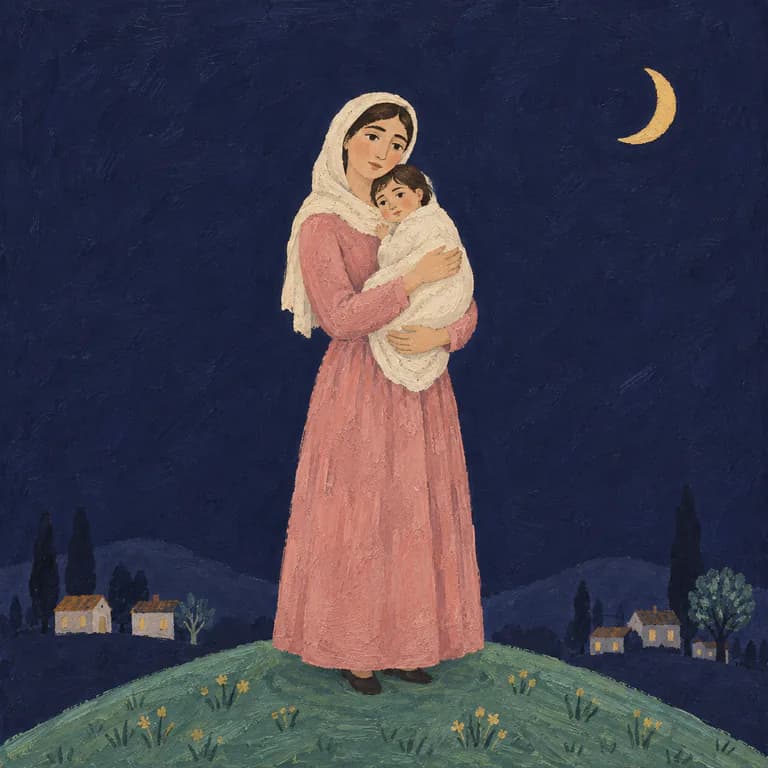
Mother en sueños: qué puede significar
- Familia
- Amor y relaciones
Esta página aún no está disponible en el idioma que elegiste (Español), así que estás viendo la versión en inglés.
BorradorEsta página aún no ha sido revisada por un editor.
La respuesta breve
Mothers are among the most frequent family characters in dreams. The dream usually reflects your real relationship, and sometimes the kind of care you need or give.
Tu sueño es personal
Cuéntalo tal como lo recuerdas. Recibirás una interpretación sobre tu sueño y tu vida, no una entrada de diccionario.
Tres formas de interpretarlo
Psicología e investigación
InvestigaciónThe Hall and Van de Castle system codes dream characters by relationship, and family members, parents above all, appear often. The continuity view reads a mother in a dream through your actual bond: closeness, conflict, worry about her health, or her voice in your decisions. When the mother figure is unfamiliar, dreamers often connect her with care, protection, or criticism, depending on the tone.
- Hall & Van de Castle 1966
- Domhoff 2001
Tradición popular
Tradición, no cienciaTradición: American popular dream books, around 1900
Dream books around 1900 read seeing your mother as she is in life as a pleasant sign, and a distressed mother as trouble. This is folklore rather than prediction.
- Miller 1901
Preguntas para hacerte
- What was your mother doing or saying in the dream?
- What is happening between you and her, or your memory of her, lately?
- Who is caring for you right now, and whom are you caring for?
Símbolos relacionados
Fuentes
Todas las interpretaciones de esta página se basan en estas obras. Aún no se han comprobado todas las referencias a páginas; las pendientes están marcadas.
Calvin S. Hall, Robert L. Van de Castle (1966). The Content Analysis of Dreams. New York: Appleton-Century-Crofts.
citado, no reproducido
- Ubicación de la cita: coding categories: characters (referencia aún sin comprobar)
The standard coding system for dream content (characters, social interactions, misfortunes, emotions, settings, objects) and its normative sample.
G. William Domhoff (2001). A New Neurocognitive Theory of Dreams. Dreaming 11(1): 13-33.
citado, no reproducido
- Ubicación de la cita: pp. 13-33 (dreams as simulations of personal concerns) (referencia aún sin comprobar)
Dreams as embodied simulations of personal concerns (the continuity view). The backbone of our psychology lens.
Gustavus Hindman Miller (1901). What's in a Dream (later reissued as Ten Thousand Dreams Interpreted).
dominio público
- Ubicación de la cita: entry: Mother (referencia aún sin comprobar)
An American popular dream dictionary. Its entries are written as omens ("foretells"); we only report how people once read a symbol, never as a forecast.