
ნაბუქოდონოსორიSet in the 6th century BCE; the book is dated much later
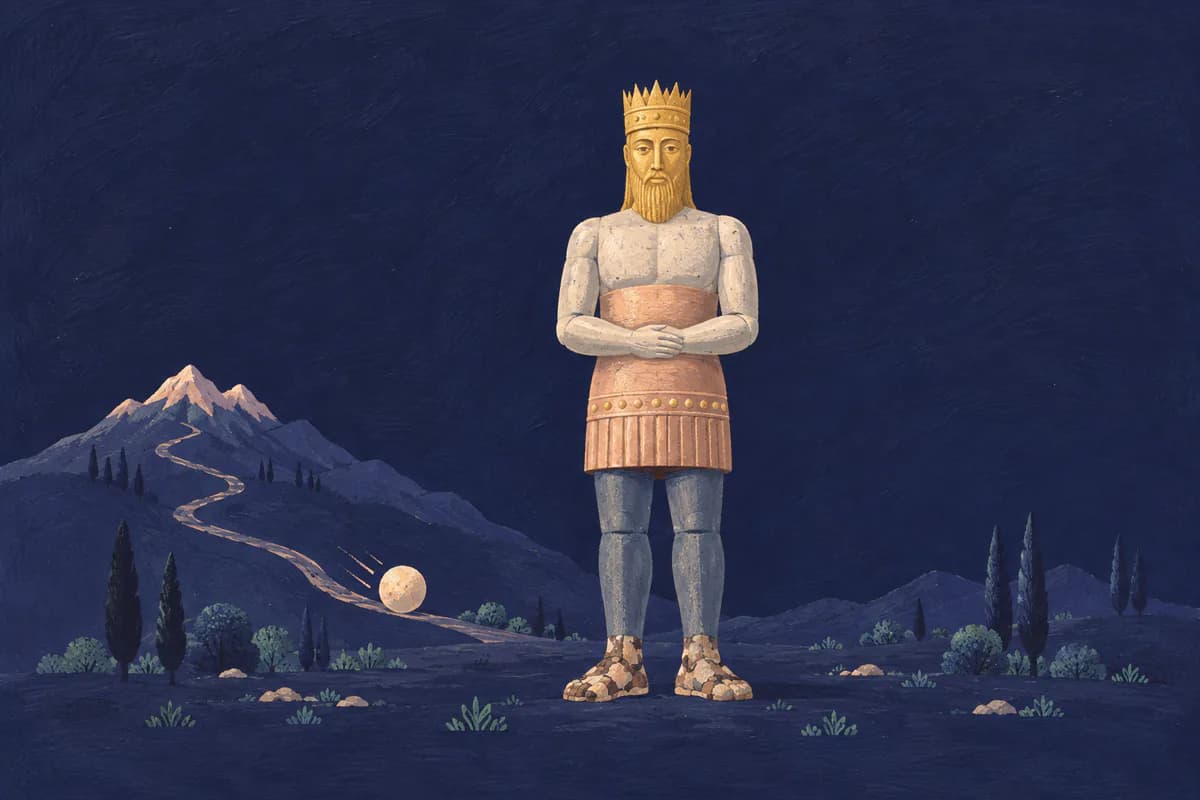
Nebuchadnezzar's statue of gold, silver, bronze and clay
A king demands that his wise men tell him not only what his dream means, but what the dream was. Only Daniel can.
ეს გვერდი ჯერ არ არის ხელმისაწვდომი ენაზე: ქართული. ამიტომ ინგლისურ ვერსიას კითხულობ.
მონახაზიეს გვერდი რედაქტორს ჯერ არ გადაუხედავს.
სიზმარი
ქვემოთ მოცემული წყაროების მიხედვით, ჩვენი სიტყვებით, ციტირების გარეშე.
In the Book of Daniel, King Nebuchadnezzar of Babylon has a troubling dream and orders his magicians to tell him both the dream and its meaning, threatening them with death when they cannot. The young Jewish exile Daniel prays and is shown the dream in a night vision.
The king had seen a huge statue: a head of gold, chest and arms of silver, belly and thighs of bronze, legs of iron and feet of iron mixed with clay. A stone cut out without hands struck its feet and shattered it, and the stone grew into a mountain that filled the earth. Daniel reads the metals as a succession of kingdoms, ending with a kingdom that will never be destroyed.
- Daniel 1611
საიდან მოდის ეს ამბავი
The story is set at the Babylonian court in the sixth century BCE. Most modern biblical scholars date the Book of Daniel in its final form to the second century BCE, during the persecution under the Seleucid king Antiochus IV, and read its visions as addressed to that time.
In chapter 4 Nebuchadnezzar dreams again, of a great tree cut down to a stump, which Daniel reads as the king's own coming humiliation. "Feet of clay", now a common phrase for a hidden weakness, comes from chapter 2.
როგორ წაიკითხეს
წმინდა წერილი
Within the book, the dream shows that earthly empires, however splendid, are temporary and that God rules over them. The demand to recount the dream itself is a test that sets divine revelation apart from the techniques of court dream-interpreters.
- Daniel 1611
ისტორია
Read in its likely setting, the sequence of kingdoms was a message of hope for Jews living under foreign rule: the last and most divided empire would fall. It belongs to a wider ancient Near Eastern world in which kings' dreams were matters of state.
- Collins 1993
კითხვები შენი სიზმრებისთვის
- What in your life looks impressive but stands on feet of clay?
- Have you ever wanted someone to tell you what your dream meant without explaining it?
- Which dreams of yours are about change you fear, and which about change you hope for?
სიმბოლოები ამ სიზმარში
გქონდა სიზმარი, რომელიც არ გავიწყდება?
მოგვიყევი შენი სიზმარიწყაროები
ამ გვერდის ყველა წაკითხვა ამ ნაშრომებს ეყრდნობა. გვერდების მითითებები ჯერ ყველა არ არის გადამოწმებული; გადაუმოწმებელი მონიშნულია.
Hebrew Bible (1611). Daniel, in The Holy Bible (King James Version).
საჯარო დომენი
- მითითება: Daniel 2 and 4 (მითითება ჯერ არ არის გადამოწმებული)
- მითითება: Daniel 2 (მითითება ჯერ არ არის გადამოწმებული)
John J. Collins (1993). Daniel: A Commentary on the Book of Daniel (Hermeneia). Minneapolis: Fortress Press.
ციტირებულია, არ არის გადმოტანილი
- მითითება: commentary on Daniel 2 (მითითება ჯერ არ არის გადამოწმებული)