
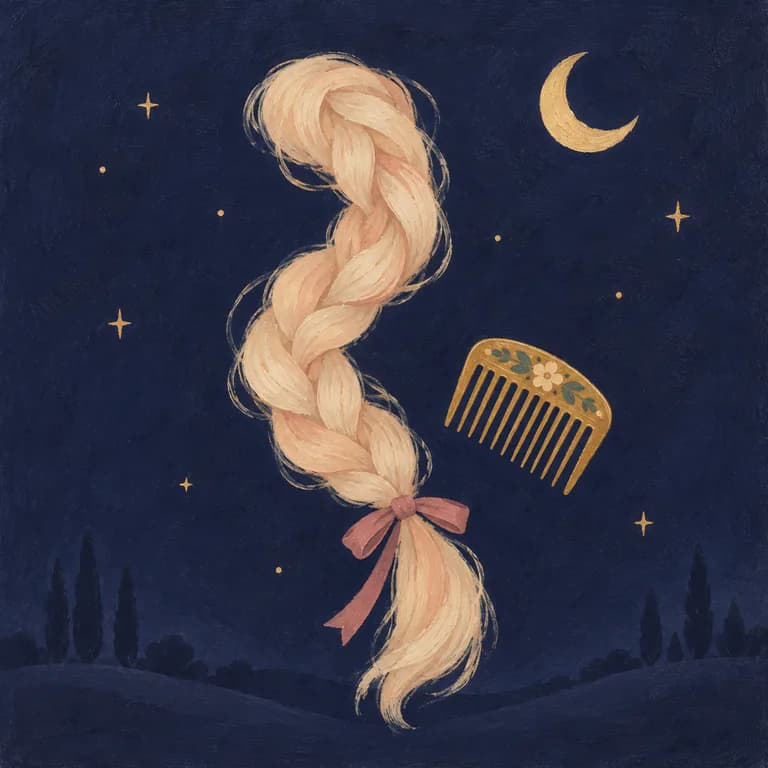
Hair nos sonhos: o que pode significar
- Corpo
- Mudança
Esta página ainda não está disponível no idioma Português (Brasil), por isso você está lendo a versão em inglês.
RascunhoEsta página ainda não foi revisada por um editor.
A resposta breve
Hair dreams often concern appearance, identity and change: a new haircut can feel like a new start, while hair falling out often joins teeth dreams as an image of loss or worry about ageing.
Seu sonho é só seu
Conte do jeito que você lembra. Você recebe uma interpretação sobre seu sonho e sua vida, não um verbete de dicionário.
Três formas de interpretar
Psicologia e pesquisa
PesquisaHair is part of how we present ourselves, so the continuity view connects hair dreams with self-image and how others see you. Cutting hair is often experienced as a decision or a clean break; losing hair, like losing teeth, often comes with worries about health, age or losing control. Stress can also affect real hair, which can make the dream feel literal.
- Domhoff 2001
- Nielsen et al. 2003
Textos clássicos
HistóriaArtemidorus discussed hair among the parts of the body: well-kept hair was generally read favourably and losing it as a loss, with the reading adjusted for the dreamer's sex, age and work.
- Artemidorus 1644
Perguntas para você refletir
- Was the change to your hair chosen or did it happen to you?
- How do you feel about the way others see you right now?
- What would a fresh start look like for you?
Símbolos relacionados
Fontes
Todas as interpretações desta página vêm destas obras. Ainda há referências de páginas que não foram conferidas; elas estão sinalizadas.
G. William Domhoff (2001). A New Neurocognitive Theory of Dreams. Dreaming 11(1): 13-33.
citado, não reproduzido
- Local da citação: pp. 13-33 (dreams as simulations of personal concerns) (referência ainda não conferida)
Dreams as embodied simulations of personal concerns (the continuity view). The backbone of our psychology lens.
Tore A. Nielsen, Antonio L. Zadra, Valérie Simard, Sébastien Saucier, Philippe Stenstrom, Carlyle Smith, Don Kuiken (2003). The typical dreams of Canadian university students. Dreaming 13(4): 211-235.
citado, não reproduzido
- Local da citação: typical dreams questionnaire, results (referência ainda não conferida)
Survey of how many people report having had common dream themes (being chased, falling, teeth, flying, exams, nakedness and others) at least once.
Artemidorus of Daldis (1644). The Interpretation of Dreams (Oneirocritica), in five books, tradução de Robert Wood. London.
primeira publicação: 2nd century CE
domínio público
- Local da citação: Book I, on hair (referência ainda não conferida)
Greek dream manual from the Roman era. We paraphrase the public-domain Wood translation (1644). Modern translations (White 1975, Harris-McCoy 2012, Hammond 2020) are copyrighted and only cited.