
Pharaoh, interpreted by JosephUndated; told in the Book of Genesis
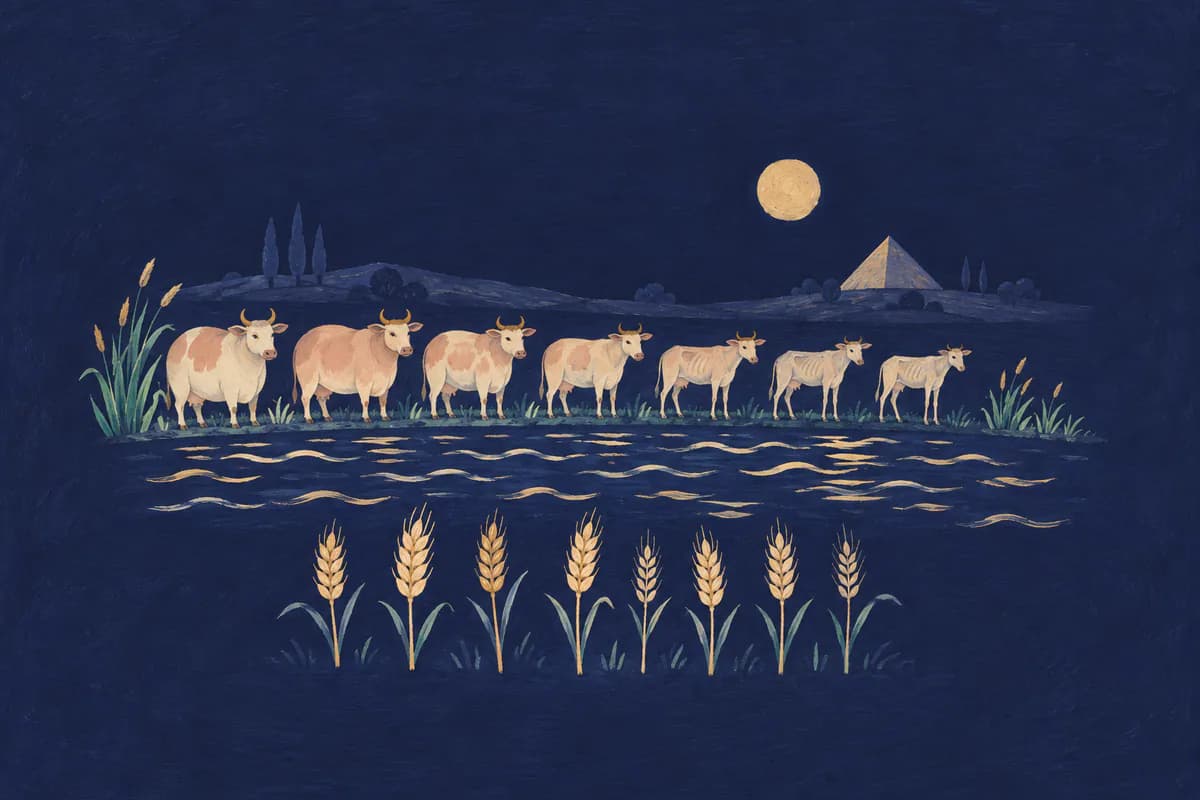
Pharaoh's cows and ears of grain
Perhaps the best-known dream interpretation in world literature, and a window into how the ancient world thought about dreams.
Diese Seite ist für die Sprache Deutsch noch nicht verfügbar. Deshalb liest du die englische Version.
EntwurfDiese Seite wurde noch nicht redaktionell geprüft.
Der Traum
Nach den unten genannten Quellen in eigenen Worten nacherzählt, nicht zitiert.
In the story, Pharaoh dreams that he is standing by the river. Seven healthy, well-fed cows come up out of the water, followed by seven thin, starved cows, and the thin cows eat the fat ones. He wakes, sleeps again and dreams of seven full ears of grain on one stalk, swallowed by seven thin ears scorched by the east wind.
None of Pharaoh's advisers can explain the dreams. His chief butler remembers a young Hebrew prisoner, Joseph, who once explained the butler's own dream correctly. Joseph is brought from prison and says the two dreams are one: seven years of plenty are coming, followed by seven years of famine.
- Genesis 1611
Woher die Geschichte stammt
The story sits in Genesis 41, part of the longer Joseph narrative (Genesis 37 to 50), in which dreams drive the plot from the start. Joseph advises Pharaoh to store part of each good harvest, and Pharaoh puts him in charge of the preparations.
In the text, the interpretation is presented as coming from God, not from Joseph's own skill. The account is scripture and literature, not a historical record we can date.
Wie der Traum gedeutet wurde
Heilige Schriften
Within the story, the dream is a divine message about the future, and its meaning depends on an inspired interpreter. That view of dreams, as messages sent to rulers and prophets, was widespread in the ancient Near East and the classical world.
- Genesis 1611
Geschichte
We include this story because it shaped how many people still think about dreams, not as a model for our readings. Pillowtea does not treat dreams as predictions. What the story does show well is the pull of a vivid, repeated image: Pharaoh dreamed the same idea twice, and could not stop thinking about it.
Fragen zu deinen eigenen Träumen
- Have you had two different dreams that seemed to say the same thing?
- What are you preparing for right now, in good times or hard ones?
- Who in your life do you turn to when something you saw or felt will not leave you?
Symbole in diesem Traum
Hattest du einen Traum, der dir im Gedächtnis geblieben ist?
Meinen Traum erzählenQuellen
Jede Deutung auf dieser Seite stammt aus diesen Werken. Noch sind nicht alle Seitenangaben geprüft. Ausstehende Prüfungen sind gekennzeichnet.
Hebrew Bible (1611). Genesis, in The Holy Bible (King James Version).
gemeinfrei
- Fundstelle: Genesis 41:1-36 (Fundstelle noch nicht geprüft)
- Fundstelle: Genesis 41:16, 41:25-32 (Fundstelle noch nicht geprüft)
Quoted from the public-domain King James Version.