
Pharaoh, interpreted by JosephUndated; told in the Book of Genesis
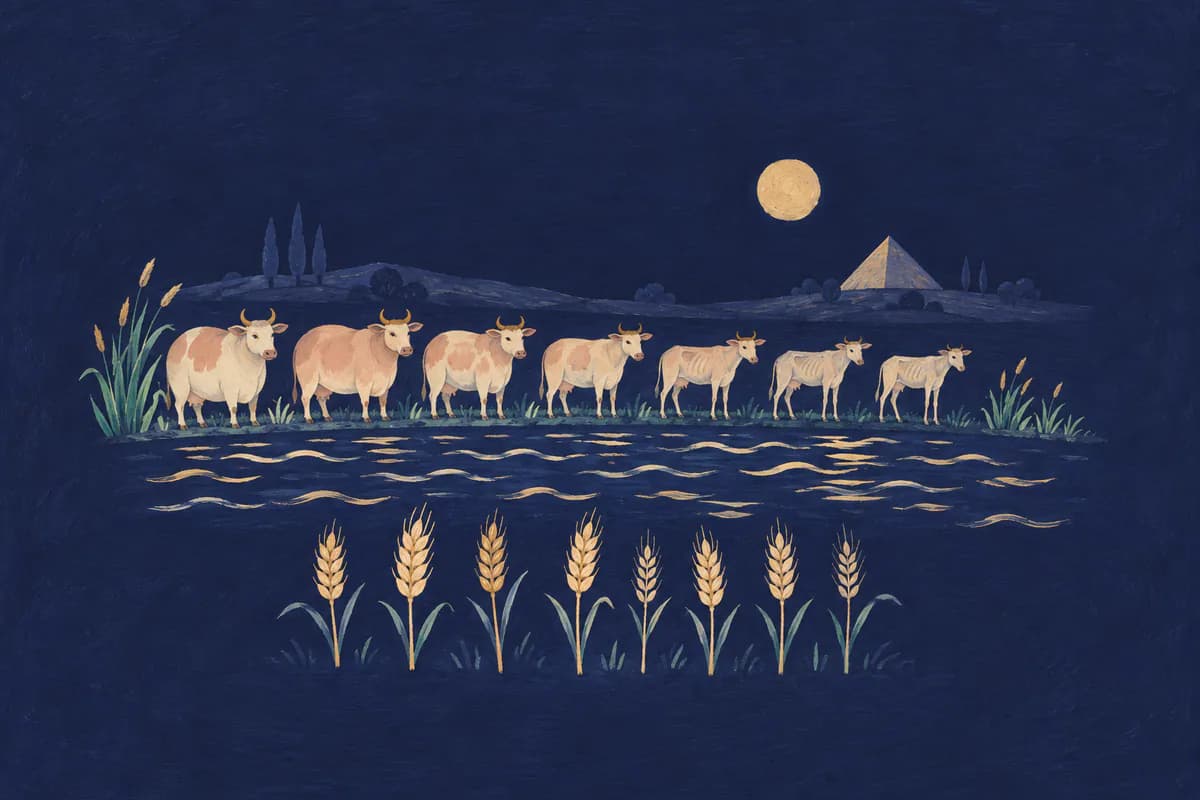
Pharaoh's cows and ears of grain
Perhaps the best-known dream interpretation in world literature, and a window into how the ancient world thought about dreams.
Esta página ainda não está disponível no idioma Português (Brasil), por isso você está lendo a versão em inglês.
RascunhoEsta página ainda não foi revisada por um editor.
O sonho
Recontado com nossas próprias palavras a partir das fontes abaixo, sem citação literal.
In the story, Pharaoh dreams that he is standing by the river. Seven healthy, well-fed cows come up out of the water, followed by seven thin, starved cows, and the thin cows eat the fat ones. He wakes, sleeps again and dreams of seven full ears of grain on one stalk, swallowed by seven thin ears scorched by the east wind.
None of Pharaoh's advisers can explain the dreams. His chief butler remembers a young Hebrew prisoner, Joseph, who once explained the butler's own dream correctly. Joseph is brought from prison and says the two dreams are one: seven years of plenty are coming, followed by seven years of famine.
- Genesis 1611
De onde vem a história
The story sits in Genesis 41, part of the longer Joseph narrative (Genesis 37 to 50), in which dreams drive the plot from the start. Joseph advises Pharaoh to store part of each good harvest, and Pharaoh puts him in charge of the preparations.
In the text, the interpretation is presented as coming from God, not from Joseph's own skill. The account is scripture and literature, not a historical record we can date.
Como foi interpretado
Escrituras
Within the story, the dream is a divine message about the future, and its meaning depends on an inspired interpreter. That view of dreams, as messages sent to rulers and prophets, was widespread in the ancient Near East and the classical world.
- Genesis 1611
História
We include this story because it shaped how many people still think about dreams, not as a model for our readings. Pillowtea does not treat dreams as predictions. What the story does show well is the pull of a vivid, repeated image: Pharaoh dreamed the same idea twice, and could not stop thinking about it.
Perguntas para seus próprios sonhos
- Have you had two different dreams that seemed to say the same thing?
- What are you preparing for right now, in good times or hard ones?
- Who in your life do you turn to when something you saw or felt will not leave you?
Símbolos neste sonho
Teve um sonho que marcou você?
Quero contar meu sonhoFontes
Todas as interpretações desta página vêm destas obras. Ainda há referências de páginas que não foram conferidas; elas estão sinalizadas.
Hebrew Bible (1611). Genesis, in The Holy Bible (King James Version).
domínio público
- Local da citação: Genesis 41:1-36 (referência ainda não conferida)
- Local da citação: Genesis 41:16, 41:25-32 (referência ainda não conferida)
Quoted from the public-domain King James Version.