
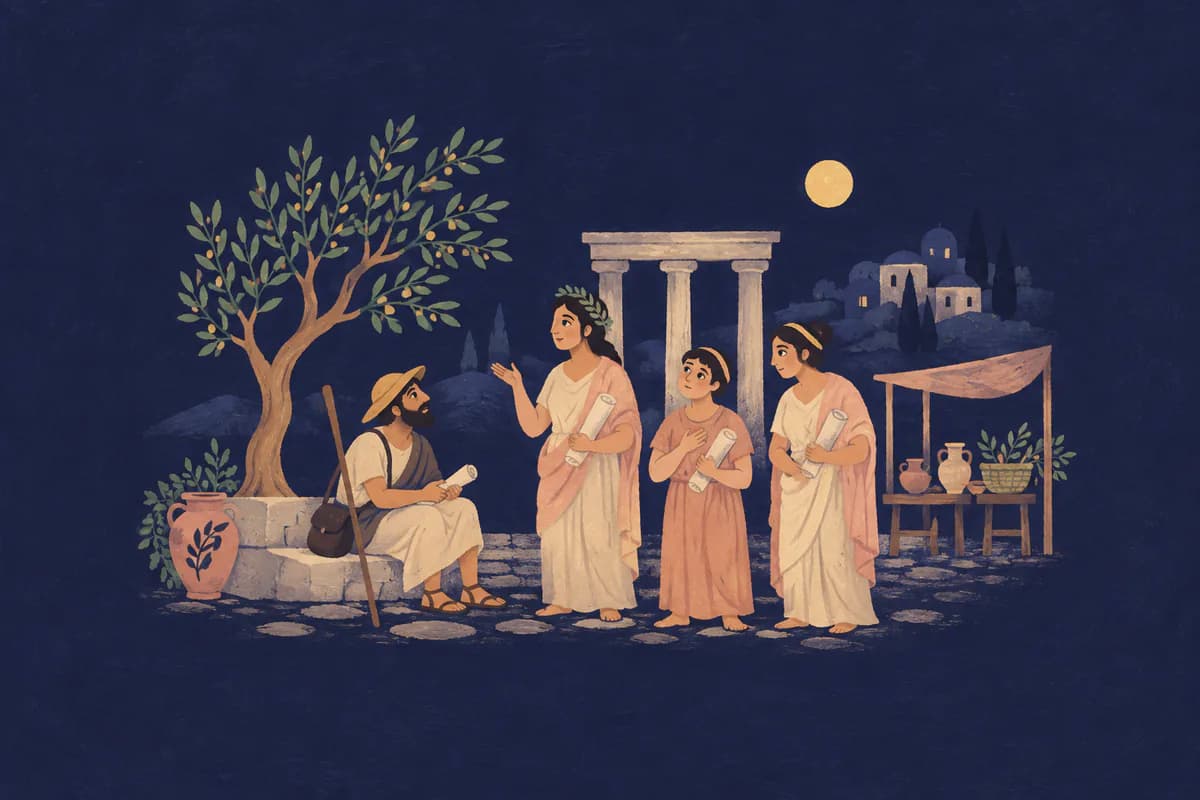
Dreamers recorded by Artemidorus2nd century CE
Artemidorus' casebook of dreams
The oldest surviving collection of real people's dreams, each paired with what the dreamer believed happened next.
Esta página aún no está disponible en el idioma que elegiste (Español), así que estás viendo la versión en inglés.
BorradorEsta página aún no ha sido revisada por un editor.
El sueño
Narrado con nuestras propias palabras a partir de las fuentes indicadas abajo, sin citas textuales.
Artemidorus of Daldis wrote the Oneirocritica, a manual of dream interpretation in five books. The fifth is different from the rest: instead of rules, it is a list of short case reports. Each one gives a dream and then the event that followed it, as reported to him.
He says he collected dreams by travelling through Greece, Asia Minor and Italy and by listening to many people, including the professional diviners of the marketplace whom others looked down on.
- Artemidorus 1644
De dónde viene la historia
Artemidorus lived in the Roman empire in the second century. His work is the only complete ancient dream book to survive, and it is read today by historians of everyday life, because the dreams mention slaves, athletes, sailors, family quarrels and money worries.
Book V was meant as evidence that his method worked. Because only dreams that seemed to come true were likely to be remembered and passed on, the collection shows how people understood dreams, not that dreams predict events.
Cómo se ha interpretado
Textos clásicos
Artemidorus insisted that the same image means different things for different dreamers: their work, age, health and circumstances all mattered. That attention to the individual dreamer is the part of his method that still feels modern.
- Artemidorus 1644
Historia
A casebook of dreams that came true has a built-in bias: dreams that were followed by nothing notable were forgotten. We read Book V as a record of people's hopes and fears in the second century, and we do not use it to predict anything.
Preguntas para tus propios sueños
- Which details of your own life would someone need to know to understand your dream?
- Do you remember dreams more when something happens afterwards?
- If you kept a casebook of your dreams for a month, what patterns might appear?
Símbolos de este sueño
¿Has tenido un sueño que no has podido olvidar?
Contar mi sueñoFuentes
Todas las interpretaciones de esta página se basan en estas obras. Aún no se han comprobado todas las referencias a páginas; las pendientes están marcadas.
Artemidorus of Daldis (1644). The Interpretation of Dreams (Oneirocritica), in five books, traducción de Robert Wood. London.
primera publicación: 2nd century CE
dominio público
- Ubicación de la cita: Book V (referencia aún sin comprobar)
- Ubicación de la cita: Book I, introduction; Book V (referencia aún sin comprobar)
Greek dream manual from the Roman era. We paraphrase the public-domain Wood translation (1644). Modern translations (White 1975, Harris-McCoy 2012, Hammond 2020) are copyrighted and only cited.