
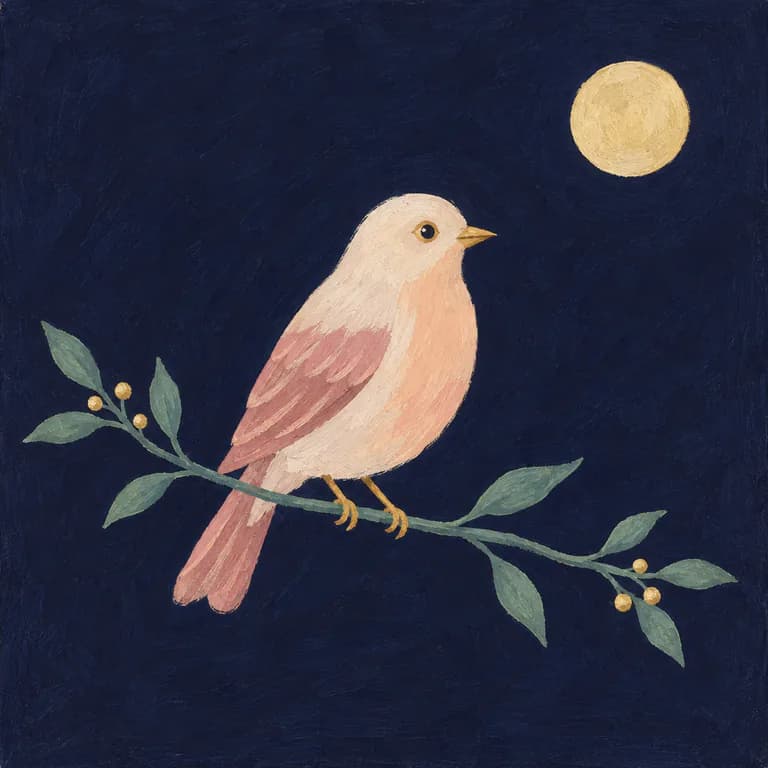
სიზმარში ფრინველი: რას შეიძლება ნიშნავდეს
- ცხოველები
- ბუნება
ეს გვერდი ჯერ არ არის ხელმისაწვდომი ენაზე: ქართული. ამიტომ ინგლისურ ვერსიას კითხულობ.
მონახაზიეს გვერდი რედაქტორს ჯერ არ გადაუხედავს.
მოკლე პასუხი
Birds bring freedom, messages and sometimes dread, depending on the bird and the dreamer. Many people connect a caged bird with feeling held back and a bird in flight with longing.
შენი სიზმარი მხოლოდ შენია
მოყევი ისე, როგორც გახსოვს. მიიღებ წაკითხვას შენს სიზმარსა და ცხოვრებაზე, და არა ლექსიკონის ჩანაწერს.
წაკითხვის სამი გზა
ფსიქოლოგია და კვლევა
კვლევაAnimals are a regular part of dream content, and the continuity view suggests each animal carries the dreamer's own associations. A dove, a crow and a parrot mean different things to different people and cultures. The emotion is the best guide: was the bird free, trapped, singing, injured or coming toward you?
- Hall & Van de Castle 1966
- Domhoff 2001
კლასიკური ტექსტები
ისტორიაArtemidorus read different birds as different kinds of people and news, with large birds of prey tied to powerful people and smaller birds to ordinary life and talk. His method was to ask what the bird was like and what it did, a question worth asking of your own dream.
- Artemidorus 1644
ხალხური ტრადიცია
ტრადიცია და არა მეცნიერებატრადიცია: American popular dream books, around 1900
Miller's 1901 dream dictionary read birds of beautiful plumage as a hopeful sign for love and marriage, and wounded or dead birds as sorrow. It is one old popular tradition, reported here as history, not as a prediction.
- Miller 1901
კითხვები საკუთარი თავისთვის
- Was the bird free or trapped, and how did that feel?
- What news or message are you waiting for?
- Where in your life do you want more room to fly?
მსგავსი სიმბოლოები
წყაროები
ამ გვერდის ყველა წაკითხვა ამ ნაშრომებს ეყრდნობა. გვერდების მითითებები ჯერ ყველა არ არის გადამოწმებული; გადაუმოწმებელი მონიშნულია.
Calvin S. Hall, Robert L. Van de Castle (1966). The Content Analysis of Dreams. New York: Appleton-Century-Crofts.
ციტირებულია, არ არის გადმოტანილი
- მითითება: coding categories: animals (მითითება ჯერ არ არის გადამოწმებული)
The standard coding system for dream content (characters, social interactions, misfortunes, emotions, settings, objects) and its normative sample.
G. William Domhoff (2001). A New Neurocognitive Theory of Dreams. Dreaming 11(1): 13-33.
ციტირებულია, არ არის გადმოტანილი
- მითითება: pp. 13-33 (dreams as simulations of personal concerns) (მითითება ჯერ არ არის გადამოწმებული)
Dreams as embodied simulations of personal concerns (the continuity view). The backbone of our psychology lens.
Artemidorus of Daldis (1644). The Interpretation of Dreams (Oneirocritica), in five books, თარგმანი: Robert Wood. London.
პირველად გამოიცა: 2nd century CE
საჯარო დომენი
- მითითება: Book II, on birds (მითითება ჯერ არ არის გადამოწმებული)
Greek dream manual from the Roman era. We paraphrase the public-domain Wood translation (1644). Modern translations (White 1975, Harris-McCoy 2012, Hammond 2020) are copyrighted and only cited.
Gustavus Hindman Miller (1901). What's in a Dream (later reissued as Ten Thousand Dreams Interpreted).
საჯარო დომენი
- მითითება: entry: Birds (მითითება ჯერ არ არის გადამოწმებული)
An American popular dream dictionary. Its entries are written as omens ("foretells"); we only report how people once read a symbol, never as a forecast.