
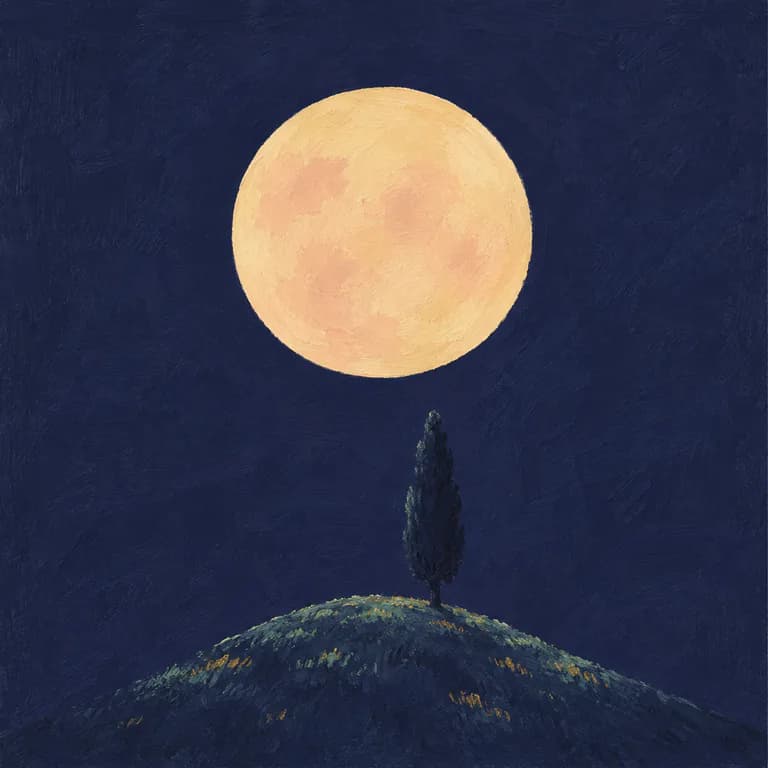
სიზმარში მთვარე: რას შეიძლება ნიშნავდეს
- ბუნება
- ცვლილება
- ოჯახი
ეს გვერდი ჯერ არ არის ხელმისაწვდომი ენაზე: ქართული. ამიტომ ინგლისურ ვერსიას კითხულობ.
მონახაზიეს გვერდი რედაქტორს ჯერ არ გადაუხედავს.
მოკლე პასუხი
The moon changes shape but always returns, lighting the dark without warming it. Many dreamers connect it with cycles, moods, mystery or a quiet figure watching over them.
შენი სიზმარი მხოლოდ შენია
მოყევი ისე, როგორც გახსოვს. მიიღებ წაკითხვას შენს სიზმარსა და ცხოვრებაზე, და არა ლექსიკონის ჩანაწერს.
წაკითხვის სამი გზა
ფსიქოლოგია და კვლევა
კვლევაOn the continuity view, images in dreams carry the dreamer's own associations, and the moon is rich in them: night walks, romance, loneliness, calendars, a grandmother's sayings. There is no good evidence that the moon's phase changes what we dream, so treat a moon in your dream as your mind's image, not an outside influence. Its size, colour and phase in the dream can be worth noting for yourself.
- Domhoff 2001
- Zadra & Stickgold 2021
კლასიკური ტექსტები
ისტორიაIn Genesis, Joseph dreams that the sun, the moon and eleven stars bow down to him, and his father Jacob reads the moon as Joseph's mother. Artemidorus likewise tied the moon to women, and especially to the dreamer's wife or mother. Both show an old habit of reading the moon as a close, nurturing figure.
- Genesis 1611
- Artemidorus 1644
ხალხური ტრადიცია
ტრადიცია და არა მეცნიერებატრადიცია: American popular dream books, around 1900
Miller's 1901 dream dictionary read a clear, bright moon as a hopeful sign for love and ventures, and a clouded or strange moon as a sign of disappointment. It is one old popular reading, reported as history rather than prediction.
- Miller 1901
კითხვები საკუთარი თავისთვის
- What in your life moves in cycles, coming and going?
- Who watches over you quietly, or whom do you watch over?
- What did the light of the moon let you see that you could not see before?
მსგავსი სიმბოლოები
წყაროები
ამ გვერდის ყველა წაკითხვა ამ ნაშრომებს ეყრდნობა. გვერდების მითითებები ჯერ ყველა არ არის გადამოწმებული; გადაუმოწმებელი მონიშნულია.
G. William Domhoff (2001). A New Neurocognitive Theory of Dreams. Dreaming 11(1): 13-33.
ციტირებულია, არ არის გადმოტანილი
- მითითება: pp. 13-33 (dreams as simulations of personal concerns) (მითითება ჯერ არ არის გადამოწმებული)
Dreams as embodied simulations of personal concerns (the continuity view). The backbone of our psychology lens.
Antonio Zadra, Robert Stickgold (2021). When Brains Dream: Exploring the Science and Mystery of Sleep. New York: W. W. Norton.
ციტირებულია, არ არის გადმოტანილი
- მითითება: the NEXTUP model (მითითება ჯერ არ არის გადამოწმებული)
NEXTUP model: dreaming explores weak, unexpected associations between memories.
Hebrew Bible (1611). Genesis, in The Holy Bible (King James Version).
საჯარო დომენი
- მითითება: Genesis 37:9-10 (მითითება ჯერ არ არის გადამოწმებული)
Quoted from the public-domain King James Version.
Artemidorus of Daldis (1644). The Interpretation of Dreams (Oneirocritica), in five books, თარგმანი: Robert Wood. London.
პირველად გამოიცა: 2nd century CE
საჯარო დომენი
- მითითება: Book II, on the heavenly bodies (მითითება ჯერ არ არის გადამოწმებული)
Greek dream manual from the Roman era. We paraphrase the public-domain Wood translation (1644). Modern translations (White 1975, Harris-McCoy 2012, Hammond 2020) are copyrighted and only cited.
Gustavus Hindman Miller (1901). What's in a Dream (later reissued as Ten Thousand Dreams Interpreted).
საჯარო დომენი
- მითითება: entry: Moon (მითითება ჯერ არ არის გადამოწმებული)
An American popular dream dictionary. Its entries are written as omens ("foretells"); we only report how people once read a symbol, never as a forecast.