
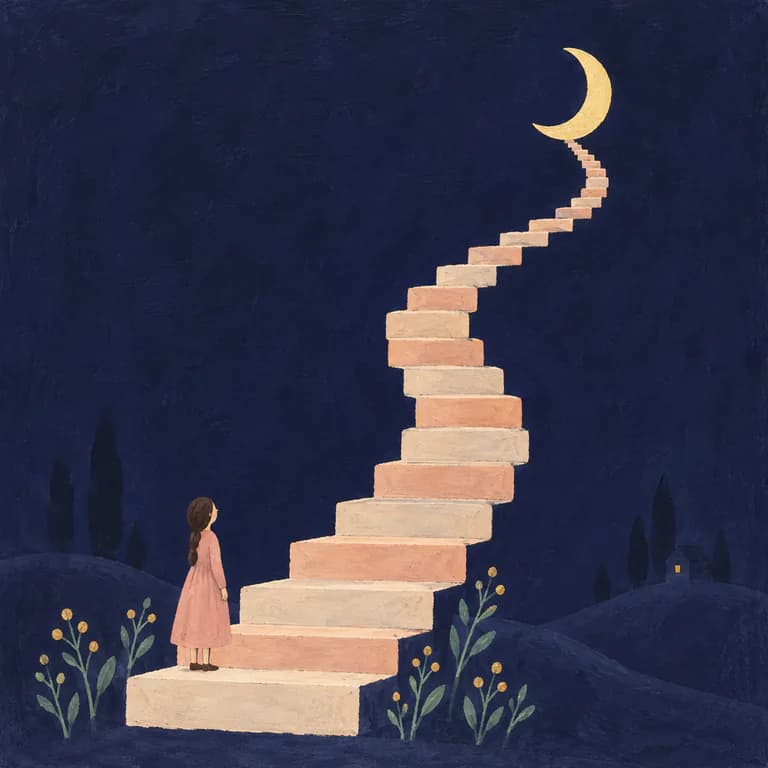
სიზმარში კიბე: რას შეიძლება ნიშნავდეს
- ცვლილება
- ადგილები
- გამოცდა და შეფასება
ეს გვერდი ჯერ არ არის ხელმისაწვდომი ენაზე: ქართული. ამიტომ ინგლისურ ვერსიას კითხულობ.
მონახაზიეს გვერდი რედაქტორს ჯერ არ გადაუხედავს.
მოკლე პასუხი
Stairs are about going up or down, step by step. Many dreamers connect them with effort, progress or setbacks, and endless stairs with a goal that keeps moving away.
შენი სიზმარი მხოლოდ შენია
მოყევი ისე, როგორც გახსოვს. მიიღებ წაკითხვას შენს სიზმარსა და ცხოვრებაზე, და არა ლექსიკონის ჩანაწერს.
წაკითხვის სამი გზა
ფსიქოლოგია და კვლევა
კვლევაOn the continuity view, dreams borrow familiar settings to act out current concerns. Climbing can mirror effort toward a goal, and slipping or stairs that never end can mirror frustration. Near-falls on stairs also belong to the family of falling dreams that surveys list among the typical themes many people report. The direction you were going and how it felt are the useful details.
- Domhoff 2001
- Nielsen et al. 2003
კლასიკური ტექსტები
ისტორიაIn Genesis, Jacob dreams of a ladder set on the earth reaching to heaven, with angels going up and down it, and wakes calling the place the house of God. Much later Freud, writing in a very different frame, listed stairs, steps and ladders among images he read as sexual symbols; later dream research has not supported his fixed symbol list, so we give it as a historical view.
ხალხური ტრადიცია
ტრადიცია და არა მეცნიერებატრადიცია: American popular dream books, around 1900
Miller's 1901 dream dictionary read going up stairs as a sign of good fortune and falling down them as a sign of envy and trouble from others. It is reported here as how people once read the image, not as a forecast.
- Miller 1901
კითხვები საკუთარი თავისთვის
- Were you going up or down, and did you want to?
- What goal in your life feels like it takes one more step every time you look?
- Did anyone else share the stairs with you?
მსგავსი სიმბოლოები
წყაროები
ამ გვერდის ყველა წაკითხვა ამ ნაშრომებს ეყრდნობა. გვერდების მითითებები ჯერ ყველა არ არის გადამოწმებული; გადაუმოწმებელი მონიშნულია.
G. William Domhoff (2001). A New Neurocognitive Theory of Dreams. Dreaming 11(1): 13-33.
ციტირებულია, არ არის გადმოტანილი
- მითითება: pp. 13-33 (dreams as simulations of personal concerns) (მითითება ჯერ არ არის გადამოწმებული)
Dreams as embodied simulations of personal concerns (the continuity view). The backbone of our psychology lens.
Tore A. Nielsen, Antonio L. Zadra, Valérie Simard, Sébastien Saucier, Philippe Stenstrom, Carlyle Smith, Don Kuiken (2003). The typical dreams of Canadian university students. Dreaming 13(4): 211-235.
ციტირებულია, არ არის გადმოტანილი
- მითითება: typical dreams questionnaire, results (მითითება ჯერ არ არის გადამოწმებული)
Survey of how many people report having had common dream themes (being chased, falling, teeth, flying, exams, nakedness and others) at least once.
Hebrew Bible (1611). Genesis, in The Holy Bible (King James Version).
საჯარო დომენი
- მითითება: Genesis 28:10-19 (მითითება ჯერ არ არის გადამოწმებული)
Quoted from the public-domain King James Version.
Sigmund Freud (1913). The Interpretation of Dreams, თარგმანი: A. A. Brill. New York: Macmillan.
პირველად გამოიცა: 1900
საჯარო დომენი
- მითითება: Ch. VI, section E (representation by symbols) (მითითება ჯერ არ არის გადამოწმებული)
First English translation, of the third German edition. Public domain; scholars consider it looser than the later Strachey translation, which is copyrighted.
Gustavus Hindman Miller (1901). What's in a Dream (later reissued as Ten Thousand Dreams Interpreted).
საჯარო დომენი
- მითითება: entry: Stairs (მითითება ჯერ არ არის გადამოწმებული)
An American popular dream dictionary. Its entries are written as omens ("foretells"); we only report how people once read a symbol, never as a forecast.