
Blood nos sonhos: o que pode significar
- Corpo
- Medo e perigo
Esta página ainda não está disponível no idioma Português (Brasil), por isso você está lendo a versão em inglês.
RascunhoEsta página ainda não foi revisada por um editor.
A resposta breve
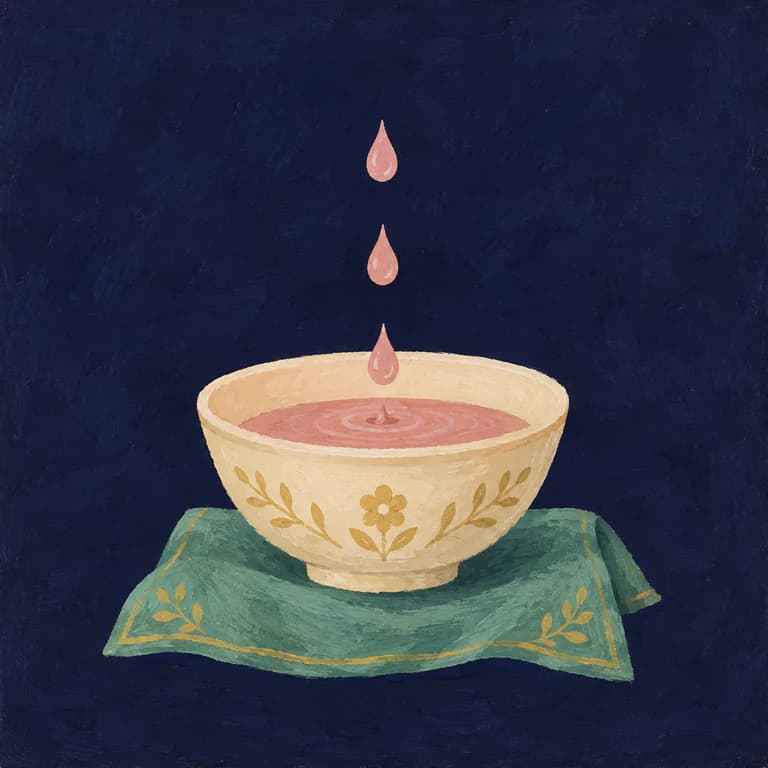
Blood is a strong, alarming dream image. It often stands for hurt, exhaustion or something vital being lost, and sometimes for family ties. It does not predict injury.
Seu sonho é só seu
Conte do jeito que você lembra. Você recebe uma interpretação sobre seu sonho e sua vida, não um verbete de dicionário.
Três formas de interpretar
Psicologia e pesquisa
PesquisaBlood draws attention in a dream the same way it does awake, so it tends to appear when feelings are intense. A continuity reading asks what is draining you or where you feel wounded: a conflict, overwork, a loss. Blood can also relate to family, as in blood relatives, or to guilt, as in blood on your hands. Violent or distressing dreams tend to rise with stress and after frightening experiences.
- Domhoff 2001
- Levin & Nielsen 2007
Tradição popular
Tradição, não ciênciaTradição: American popular dream books, around 1900
Dream books around 1900 read blood mainly as a warning, for example of unfriendly people or disappointments. We report this as tradition, not a forecast.
- Miller 1901
Perguntas para você refletir
- Whose blood was it, and was anyone hurt?
- What in your life is draining your energy right now?
- Is there a family matter or a feeling of guilt on your mind?
Símbolos relacionados
Fontes
Todas as interpretações desta página vêm destas obras. Ainda há referências de páginas que não foram conferidas; elas estão sinalizadas.
G. William Domhoff (2001). A New Neurocognitive Theory of Dreams. Dreaming 11(1): 13-33.
citado, não reproduzido
- Local da citação: pp. 13-33 (dreams as simulations of personal concerns) (referência ainda não conferida)
Dreams as embodied simulations of personal concerns (the continuity view). The backbone of our psychology lens.
Ross Levin, Tore A. Nielsen (2007). Disturbed dreaming, posttraumatic stress disorder, and affect distress: A review and neurocognitive model. Psychological Bulletin 133(3): 482-528.
citado, não reproduzido
- Local da citação: pp. 482-528 (distressing dreams and emotional distress) (referência ainda não conferida)
Nightmares and distressing dreams in relation to fear processing and emotional distress.
Gustavus Hindman Miller (1901). What's in a Dream (later reissued as Ten Thousand Dreams Interpreted).
domínio público
- Local da citação: entry: Blood (referência ainda não conferida)
An American popular dream dictionary. Its entries are written as omens ("foretells"); we only report how people once read a symbol, never as a forecast.