
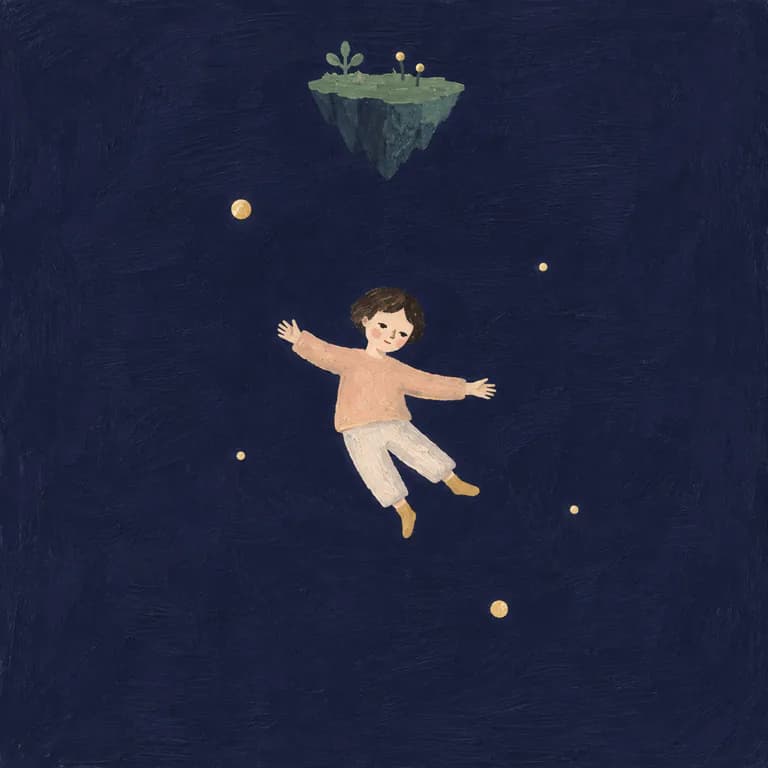
Falling nos sonhos: o que pode significar
- Medo e perigo
- Corpo
- Mudança
Esta página ainda não está disponível no idioma Português (Brasil), por isso você está lendo a versão em inglês.
RascunhoEsta página ainda não foi revisada por um editor.
A resposta breve
Falling is one of the most familiar dream experiences. It often goes with feeling unsupported or out of control, and the sudden jolt awake can simply be the body relaxing into sleep.
Seu sonho é só seu
Conte do jeito que você lembra. Você recebe uma interpretação sobre seu sonho e sua vida, não um verbete de dicionário.
Três formas de interpretar
Psicologia e pesquisa
PesquisaFalling appears near the top of the typical dreams people report in surveys. Some falling sensations happen right at sleep onset, when the muscles relax suddenly and the brain produces a brief falling image and a jerk. Longer falling dreams tend to match waking feelings of losing footing: at work, in a relationship, with money or health. Threat simulation theory reads them as rehearsal for danger, though that idea remains debated. The details matter: were you pushed, did you let go, did you land?
- Nielsen et al. 2003
- Revonsuo 2000
- Domhoff 2001
Textos clássicos
HistóriaFreud listed falling together with flying among the typical dreams, and linked both to bodily memories of childhood games of being swung and dropped. Later research has not confirmed his broader theory, but the idea that such dreams draw on body sensation is still discussed.
- Freud 1913
Tradição popular
Tradição, não ciênciaTradição: American popular dream books, around 1900
Dream books around 1900 read a fall as a sign of struggle, and a fall without injury as getting through it. This is historical folklore, not a prediction.
- Miller 1901
Perguntas para você refletir
- Where do you feel unsupported or unsure of your footing right now?
- Did you fall, or were you pushed? Did you land?
- What would help you feel more held or grounded this week?
Símbolos relacionados
Fontes
Todas as interpretações desta página vêm destas obras. Ainda há referências de páginas que não foram conferidas; elas estão sinalizadas.
Tore A. Nielsen, Antonio L. Zadra, Valérie Simard, Sébastien Saucier, Philippe Stenstrom, Carlyle Smith, Don Kuiken (2003). The typical dreams of Canadian university students. Dreaming 13(4): 211-235.
citado, não reproduzido
- Local da citação: typical dreams questionnaire, results (referência ainda não conferida)
Survey of how many people report having had common dream themes (being chased, falling, teeth, flying, exams, nakedness and others) at least once.
Antti Revonsuo (2000). The reinterpretation of dreams: An evolutionary hypothesis of the function of dreaming. Behavioral and Brain Sciences 23(6): 877-901.
citado, não reproduzidoteoria contestada
- Local da citação: pp. 877-901 (threat simulation theory) (referência ainda não conferida)
Threat simulation theory: dreams as rehearsal for danger. Influential but contested; presented as one theory among several.
G. William Domhoff (2001). A New Neurocognitive Theory of Dreams. Dreaming 11(1): 13-33.
citado, não reproduzido
- Local da citação: pp. 13-33 (dreams as simulations of personal concerns) (referência ainda não conferida)
Dreams as embodied simulations of personal concerns (the continuity view). The backbone of our psychology lens.
Sigmund Freud (1913). The Interpretation of Dreams, tradução de A. A. Brill. New York: Macmillan.
primeira publicação: 1900
domínio público
- Local da citação: Ch. V, section D, typical dreams (dreams of flying and falling) (referência ainda não conferida)
First English translation, of the third German edition. Public domain; scholars consider it looser than the later Strachey translation, which is copyrighted.
Gustavus Hindman Miller (1901). What's in a Dream (later reissued as Ten Thousand Dreams Interpreted).
domínio público
- Local da citação: entry: Falling (referência ainda não conferida)
An American popular dream dictionary. Its entries are written as omens ("foretells"); we only report how people once read a symbol, never as a forecast.