
Sigmund FreudNight of 23 to 24 July 1895
Irma's injection
The dream Freud chose to open his method with, and the first one he analysed line by line in print.
Diese Seite ist für die Sprache Deutsch noch nicht verfügbar. Deshalb liest du die englische Version.
EntwurfDiese Seite wurde noch nicht redaktionell geprüft.
Der Traum
Nach den unten genannten Quellen in eigenen Worten nacherzählt, nicht zitiert.
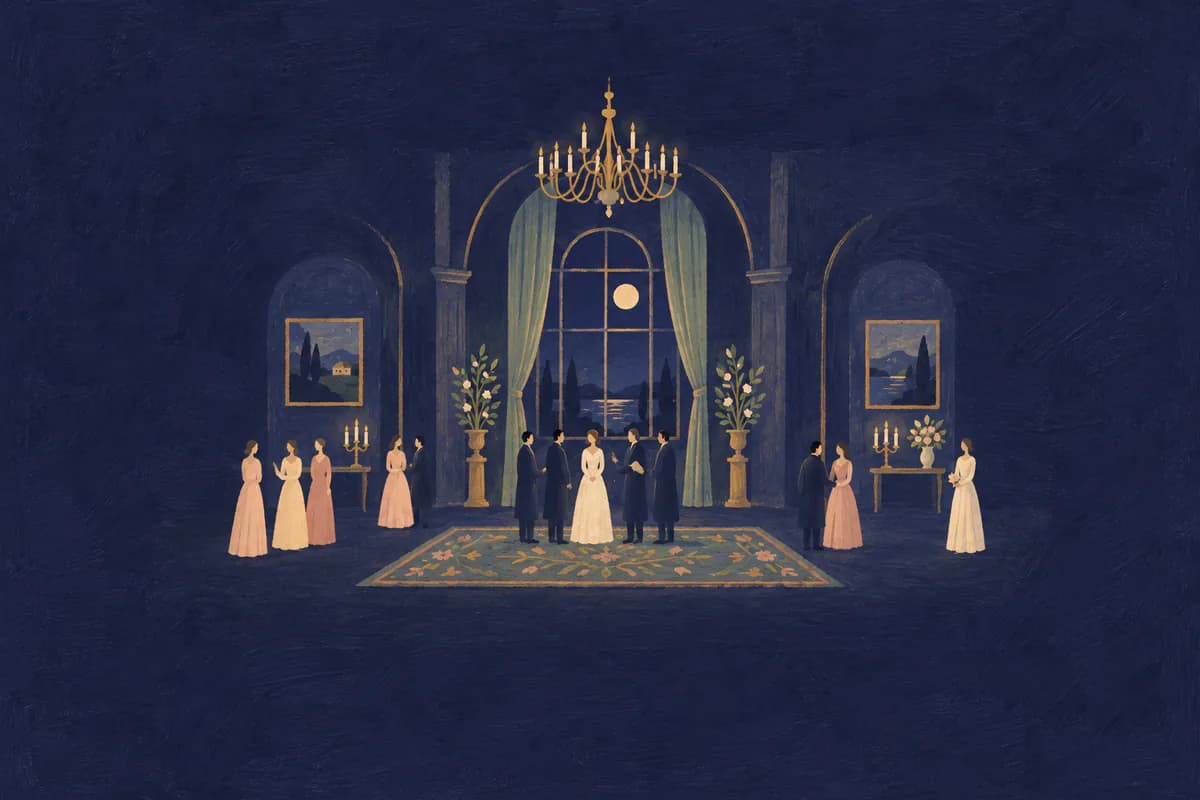
Freud dreamed of a large hall where he and his wife were receiving guests. Among them was Irma, a young woman he had been treating. He took her aside and reproached her for not accepting his explanation of her symptoms; she answered that she was in pain in her throat, stomach and abdomen.
Alarmed, he looked into her throat and saw strange white patches. Several doctors he knew gathered round and examined her. In the dream it became clear that a colleague had given her an injection with a chemical preparation, carelessly and probably with a syringe that was not clean. The formula of the chemical appeared before Freud's eyes in heavy type.
Woher die Geschichte stammt
Freud wrote the dream down in the summer of 1895 and published it in Die Traumdeutung (dated 1900) as his model example. He went through it phrase by phrase, noting what each image reminded him of from the previous day and from his work.
Irma was a real patient, and the colleagues in the dream were real people. Freud admitted that the analysis stopped short of everything it touched, because some associations were too private to publish.
Wie der Traum gedeutet wurde
Psychoanalyse
Freud's conclusion was that the dream fulfilled a wish: it cleared him of responsibility for Irma's continuing illness by placing the blame on others. This case became the foundation of his claim that every dream is a wish fulfilment, a claim most later researchers do not accept in that general form.
- Freud 1913
Forschung
Seen through the continuity idea, the dream stages a worry that clearly occupied Freud while awake: whether a patient's suffering was his fault. Modern researchers would look less for a hidden wish and more for the concern the dream keeps returning to.
- Domhoff 2001
Fragen zu deinen eigenen Träumen
- Is there a situation where you are worried that something is your fault?
- Which people from the last few days showed up in your recent dreams?
- If you went through your own dream line by line, which image would you start with?
Symbole in diesem Traum
Hattest du einen Traum, der dir im Gedächtnis geblieben ist?
Meinen Traum erzählenQuellen
Jede Deutung auf dieser Seite stammt aus diesen Werken. Noch sind nicht alle Seitenangaben geprüft. Ausstehende Prüfungen sind gekennzeichnet.
Sigmund Freud (1913). The Interpretation of Dreams, übersetzt von A. A. Brill. New York: Macmillan.
erstmals veröffentlicht: 1900
gemeinfrei
- Fundstelle: Ch. II, the analysis of a specimen dream (Fundstelle noch nicht geprüft)
- Fundstelle: Ch. II and Ch. III (Fundstelle noch nicht geprüft)
First English translation, of the third German edition. Public domain; scholars consider it looser than the later Strachey translation, which is copyrighted.
Sigmund Freud (1900). Die Traumdeutung. Leipzig and Vienna: Franz Deuticke.
erstmals veröffentlicht: November 1899 (title page dated 1900)
gemeinfrei
- Fundstelle: Ch. II (Fundstelle noch nicht geprüft)
The German original. Many of its claims are not supported by later dream research; we present it as a historical lens.
G. William Domhoff (2001). A New Neurocognitive Theory of Dreams. Dreaming 11(1): 13-33.
als Quelle angeführt, nicht vervielfältigt
- Fundstelle: pp. 13-33 (Fundstelle noch nicht geprüft)
Dreams as embodied simulations of personal concerns (the continuity view). The backbone of our psychology lens.