
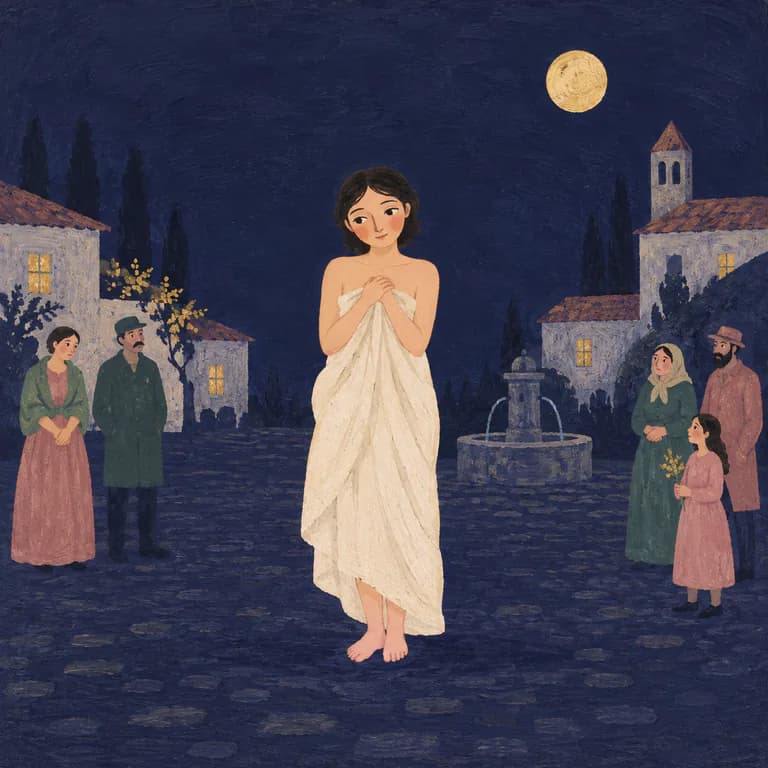
სიზმარში სიშიშვლე ხალხში: რას შეიძლება ნიშნავდეს
- გამოცდა და შეფასება
- სხეული
ეს გვერდი ჯერ არ არის ხელმისაწვდომი ენაზე: ქართული. ამიტომ ინგლისურ ვერსიას კითხულობ.
მონახაზიეს გვერდი რედაქტორს ჯერ არ გადაუხედავს.
მოკლე პასუხი
Being naked or wrongly dressed in public is a classic embarrassment dream. It usually tracks worry about being exposed, judged or unprepared, and often nobody in the dream even notices.
შენი სიზმარი მხოლოდ შენია
მოყევი ისე, როგორც გახსოვს. მიიღებ წაკითხვას შენს სიზმარსა და ცხოვრებაზე, და არა ლექსიკონის ჩანაწერს.
წაკითხვის სამი გზა
ფსიქოლოგია და კვლევა
კვლევაNakedness in public shows up on typical-dream lists in survey research. A continuity reading connects it with situations where you feel exposed: a new job, sharing something personal, being evaluated, or fear that others will see a weakness. Many dreamers notice that the people around them do not react at all, a detail that can point to the gap between how judged we feel and how much others notice.
- Nielsen et al. 2003
- Domhoff 2001
კლასიკური ტექსტები
ისტორიაFreud opened his discussion of typical dreams with the embarrassment dream of nakedness and pointed out the same curious detail: the dreamer is ashamed, yet the onlookers seem indifferent. His own explanation, tied to early childhood, is not supported by later research, but his description of the dream is still recognisable.
- Freud 1913
ხალხური ტრადიცია
ტრადიცია და არა მეცნიერებატრადიცია: American popular dream books, around 1900
Dream books around 1900 read nakedness as a warning of scandal or unwise actions. That reflects the morals of the time and is not a prediction.
- Miller 1901
კითხვები საკუთარი თავისთვის
- Where do you feel exposed or on show at the moment?
- Did anyone in the dream actually notice or react?
- What would you need in order to feel prepared?
მსგავსი სიმბოლოები
წყაროები
ამ გვერდის ყველა წაკითხვა ამ ნაშრომებს ეყრდნობა. გვერდების მითითებები ჯერ ყველა არ არის გადამოწმებული; გადაუმოწმებელი მონიშნულია.
Tore A. Nielsen, Antonio L. Zadra, Valérie Simard, Sébastien Saucier, Philippe Stenstrom, Carlyle Smith, Don Kuiken (2003). The typical dreams of Canadian university students. Dreaming 13(4): 211-235.
ციტირებულია, არ არის გადმოტანილი
- მითითება: typical dreams questionnaire, results (მითითება ჯერ არ არის გადამოწმებული)
Survey of how many people report having had common dream themes (being chased, falling, teeth, flying, exams, nakedness and others) at least once.
G. William Domhoff (2001). A New Neurocognitive Theory of Dreams. Dreaming 11(1): 13-33.
ციტირებულია, არ არის გადმოტანილი
- მითითება: pp. 13-33 (dreams as simulations of personal concerns) (მითითება ჯერ არ არის გადამოწმებული)
Dreams as embodied simulations of personal concerns (the continuity view). The backbone of our psychology lens.
Sigmund Freud (1913). The Interpretation of Dreams, თარგმანი: A. A. Brill. New York: Macmillan.
პირველად გამოიცა: 1900
საჯარო დომენი
- მითითება: Ch. V, section D, typical dreams (the embarrassment dream of nakedness) (მითითება ჯერ არ არის გადამოწმებული)
First English translation, of the third German edition. Public domain; scholars consider it looser than the later Strachey translation, which is copyrighted.
Gustavus Hindman Miller (1901). What's in a Dream (later reissued as Ten Thousand Dreams Interpreted).
საჯარო დომენი
- მითითება: entry: Nakedness (მითითება ჯერ არ არის გადამოწმებული)
An American popular dream dictionary. Its entries are written as omens ("foretells"); we only report how people once read a symbol, never as a forecast.