
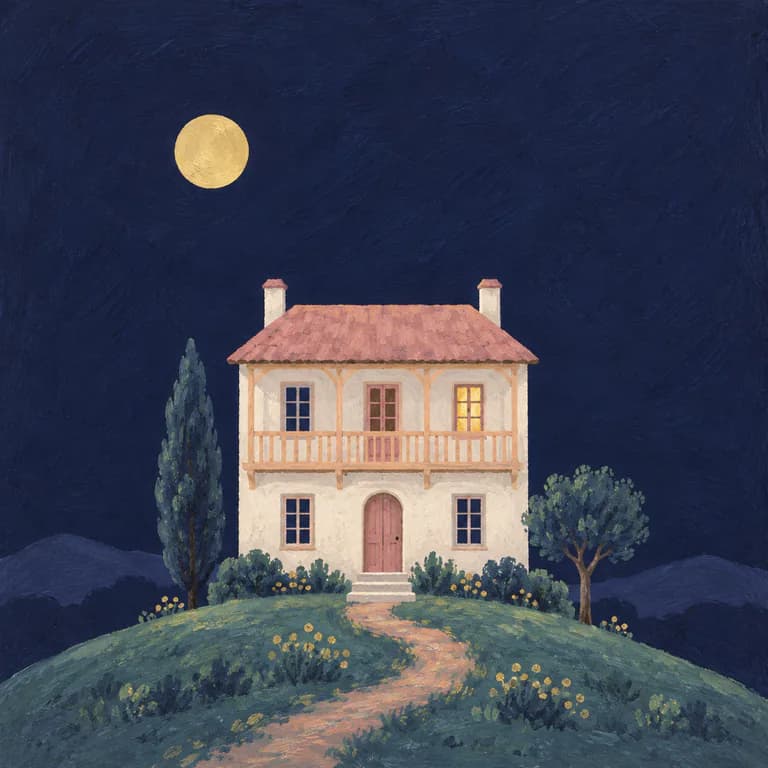
House nos sonhos: o que pode significar
- Lugares
- Família
Esta página ainda não está disponível no idioma Português (Brasil), por isso você está lendo a versão em inglês.
RascunhoEsta página ainda não foi revisada por um editor.
A resposta breve
Houses are the most common dream settings of all. A childhood home, a strange house or a newly discovered room can say a lot about belonging, the past and parts of life you are exploring.
Seu sonho é só seu
Conte do jeito que você lembra. Você recebe uma interpretação sobre seu sonho e sua vida, não um verbete de dicionário.
Três formas de interpretar
Psicologia e pesquisa
PesquisaDream content studies code settings, and familiar indoor places, homes above all, are among the most frequent. Continuity researchers note that returning to a childhood home often comes with thoughts about family, the past, or who you were then. Discovering extra rooms is a well-known dream motif that dreamers often describe as exciting, and it is commonly read as finding space or possibility in your life. The state of the house (cosy, crumbling, flooded, crowded) is usually more telling than the house itself.
- Hall & Van de Castle 1966
- Domhoff 2001
Tradição popular
Tradição, não ciênciaTradição: American popular dream books, around 1900
Dream books around 1900 read a fine new house as a move to better circumstances and a ruined house as losses. We report this as folklore, not as a forecast.
- Miller 1901
Perguntas para você refletir
- Whose house was it, and when in your life did it belong?
- What state was it in, and does that match how your home life feels now?
- Was there a room you had not seen before? What might it stand for?
Símbolos relacionados
Fontes
Todas as interpretações desta página vêm destas obras. Ainda há referências de páginas que não foram conferidas; elas estão sinalizadas.
Calvin S. Hall, Robert L. Van de Castle (1966). The Content Analysis of Dreams. New York: Appleton-Century-Crofts.
citado, não reproduzido
- Local da citação: coding categories: settings (referência ainda não conferida)
The standard coding system for dream content (characters, social interactions, misfortunes, emotions, settings, objects) and its normative sample.
G. William Domhoff (2001). A New Neurocognitive Theory of Dreams. Dreaming 11(1): 13-33.
citado, não reproduzido
- Local da citação: pp. 13-33 (dreams as simulations of personal concerns) (referência ainda não conferida)
Dreams as embodied simulations of personal concerns (the continuity view). The backbone of our psychology lens.
Gustavus Hindman Miller (1901). What's in a Dream (later reissued as Ten Thousand Dreams Interpreted).
domínio público
- Local da citação: entry: House (referência ainda não conferida)
An American popular dream dictionary. Its entries are written as omens ("foretells"); we only report how people once read a symbol, never as a forecast.