
ჯუანძი4th century BCE (traditional)
Zhuangzi's butterfly dream
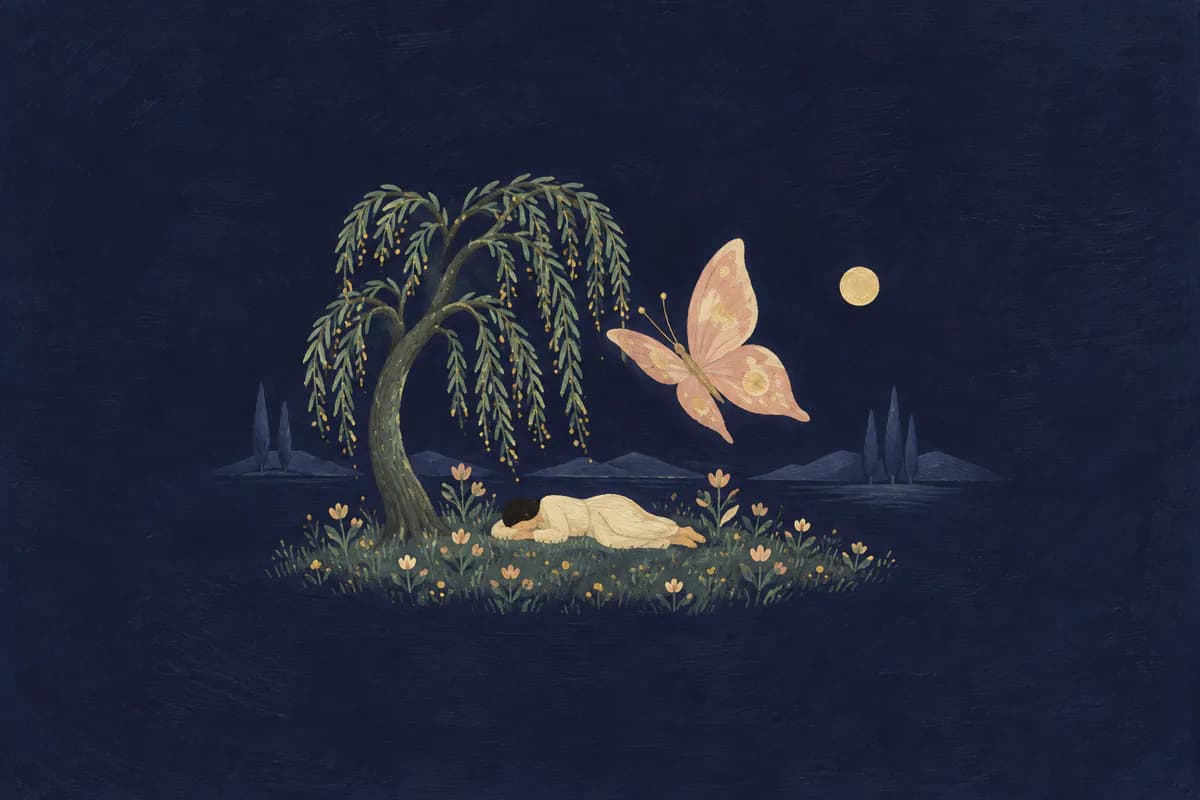
Did the philosopher dream he was a butterfly, or is a butterfly now dreaming it is a philosopher? Two thousand years later the question still unsettles people.
ეს გვერდი ჯერ არ არის ხელმისაწვდომი ენაზე: ქართული. ამიტომ ინგლისურ ვერსიას კითხულობ.
მონახაზიეს გვერდი რედაქტორს ჯერ არ გადაუხედავს.
სიზმარი
ქვემოთ მოცემული წყაროების მიხედვით, ჩვენი სიტყვებით, ციტირების გარეშე.
The Chinese philosopher Zhuang Zhou once dreamed he was a butterfly, fluttering about happily, doing as it pleased, with no idea that it was Zhou.
Then he woke up, and there he was, unmistakably Zhou. But he could not tell whether he was Zhou who had dreamed of being a butterfly, or a butterfly now dreaming of being Zhou. Between Zhou and a butterfly, the passage ends, there must be some distinction; this is what is called the transformation of things.
- Zhuangzi 1889
საიდან მოდის ეს ამბავი
The story closes the second chapter of the Zhuangzi, a Daoist classic traditionally attributed to Zhuang Zhou, who lived in the fourth century BCE. The book was compiled over a long period and scholars agree that not all of it is by him, but this chapter is usually counted among the earliest parts.
It is less a dream report than a philosophical parable, and one of the most quoted passages in Chinese literature. We retell it from Herbert Giles's public-domain translation of 1889.
როგორ წაიკითხეს
კლასიკური ტექსტები
In the Zhuangzi the point is not what the butterfly means but what the dream does: it loosens our certainty about which state is the real one. The chapter argues against fixed distinctions, and the butterfly is its most memorable example of how easily one identity becomes another.
- Zhuangzi 1889
კვლევა
Dream science has its own version of the puzzle. While we dream we rarely notice that we are dreaming; lucid dreams, in which the dreamer knows, are the exception. The feeling of being fully convinced by a dream world is one of the most studied features of ordinary dreaming.
- Zadra & Stickgold 2021
კითხვები შენი სიზმრებისთვის
- Have you ever woken unsure for a moment which world was real?
- In dreams, are you ever someone or something other than yourself?
- What in your life feels more like you than your everyday self does?
სიმბოლოები ამ სიზმარში
გქონდა სიზმარი, რომელიც არ გავიწყდება?
მოგვიყევი შენი სიზმარიწყაროები
ამ გვერდის ყველა წაკითხვა ამ ნაშრომებს ეყრდნობა. გვერდების მითითებები ჯერ ყველა არ არის გადამოწმებული; გადაუმოწმებელი მონიშნულია.
Zhuangzi (Chuang Tzŭ) (1889). Chuang Tzŭ: Mystic, Moralist, and Social Reformer, თარგმანი: Herbert A. Giles. London: Bernard Quaritch.
პირველად გამოიცა: 4th-3rd century BCE
საჯარო დომენი
- მითითება: ch. II, closing passage (მითითება ჯერ არ არის გადამოწმებული)
- მითითება: ch. II (მითითება ჯერ არ არის გადამოწმებული)
Antonio Zadra, Robert Stickgold (2021). When Brains Dream: Exploring the Science and Mystery of Sleep. New York: W. W. Norton.
ციტირებულია, არ არის გადმოტანილი
- მითითება: chapter on lucid dreaming (მითითება ჯერ არ არის გადამოწმებული)
NEXTUP model: dreaming explores weak, unexpected associations between memories.