
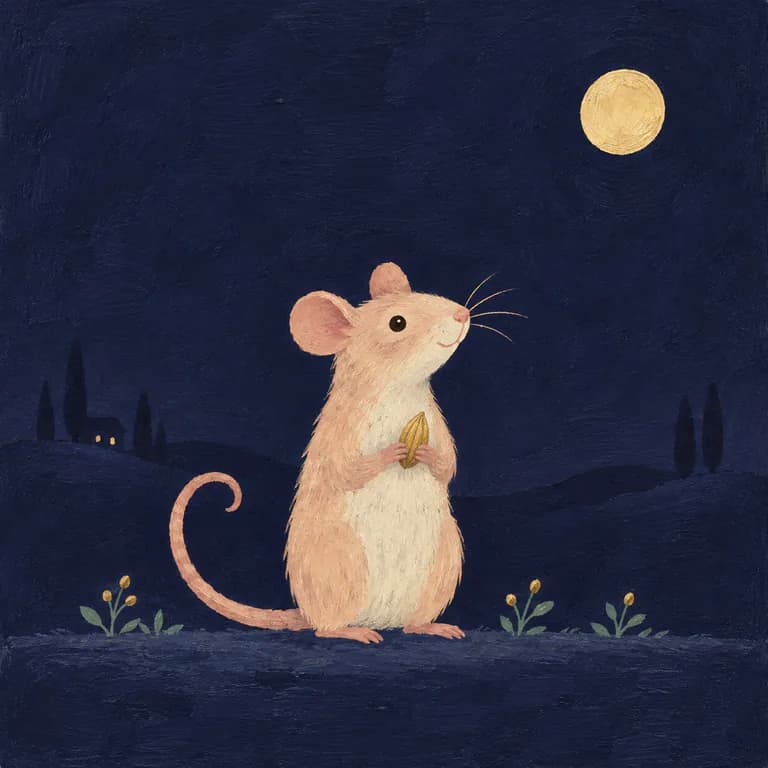
Rat nos sonhos: o que pode significar
- Animais
- Medo e perigo
- Lugares
Esta página ainda não está disponível no idioma Português (Brasil), por isso você está lendo a versão em inglês.
RascunhoEsta página ainda não foi revisada por um editor.
A resposta breve
Rats often bring disgust and a sense that something unwanted has got in. Many dreamers link them to a worry that feels small but persistent, or to someone they no longer trust.
Seu sonho é só seu
Conte do jeito que você lembra. Você recebe uma interpretação sobre seu sonho e sua vida, não um verbete de dicionário.
Três formas de interpretar
Psicologia e pesquisa
PesquisaResearchers who code dream content note both the animals that appear and the emotions attached to them. Disgust and unease are common with rats and mice, and on the continuity view that feeling is the thread back to waking life. Ask what has been gnawing at you: a hidden problem, a leak of money or energy, or a situation that feels contaminated.
- Hall & Van de Castle 1966
- Domhoff 2001
Textos clássicos
HistóriaArtemidorus read a mouse as a household servant, reasoning that it lives under the same roof and eats the same food as the family. For him the image was about the people close to the household and whether they could be trusted, a reminder that his readings were built on the dreamer's own circumstances.
- Artemidorus 1644
Tradição popular
Tradição, não ciênciaTradição: American popular dream books, around 1900
Miller's 1901 dream dictionary read rats as a sign of being deceived or wronged by people nearby, and catching or killing them as getting the better of that trouble. This was a popular reading of its time, not a forecast.
- Miller 1901
Perguntas para você refletir
- What in your life feels like it is quietly eating away at something?
- Was the rat in your own space? What would it mean to you if something had got into your home?
- Is there someone you are unsure you can trust at the moment?
Símbolos relacionados
Fontes
Todas as interpretações desta página vêm destas obras. Ainda há referências de páginas que não foram conferidas; elas estão sinalizadas.
Calvin S. Hall, Robert L. Van de Castle (1966). The Content Analysis of Dreams. New York: Appleton-Century-Crofts.
citado, não reproduzido
- Local da citação: coding categories: animals and emotions (referência ainda não conferida)
The standard coding system for dream content (characters, social interactions, misfortunes, emotions, settings, objects) and its normative sample.
G. William Domhoff (2001). A New Neurocognitive Theory of Dreams. Dreaming 11(1): 13-33.
citado, não reproduzido
- Local da citação: pp. 13-33 (dreams as simulations of personal concerns) (referência ainda não conferida)
Dreams as embodied simulations of personal concerns (the continuity view). The backbone of our psychology lens.
Artemidorus of Daldis (1644). The Interpretation of Dreams (Oneirocritica), in five books, tradução de Robert Wood. London.
primeira publicação: 2nd century CE
domínio público
- Local da citação: Book III, on the mouse (referência ainda não conferida)
Greek dream manual from the Roman era. We paraphrase the public-domain Wood translation (1644). Modern translations (White 1975, Harris-McCoy 2012, Hammond 2020) are copyrighted and only cited.
Gustavus Hindman Miller (1901). What's in a Dream (later reissued as Ten Thousand Dreams Interpreted).
domínio público
- Local da citação: entry: Rats (referência ainda não conferida)
An American popular dream dictionary. Its entries are written as omens ("foretells"); we only report how people once read a symbol, never as a forecast.